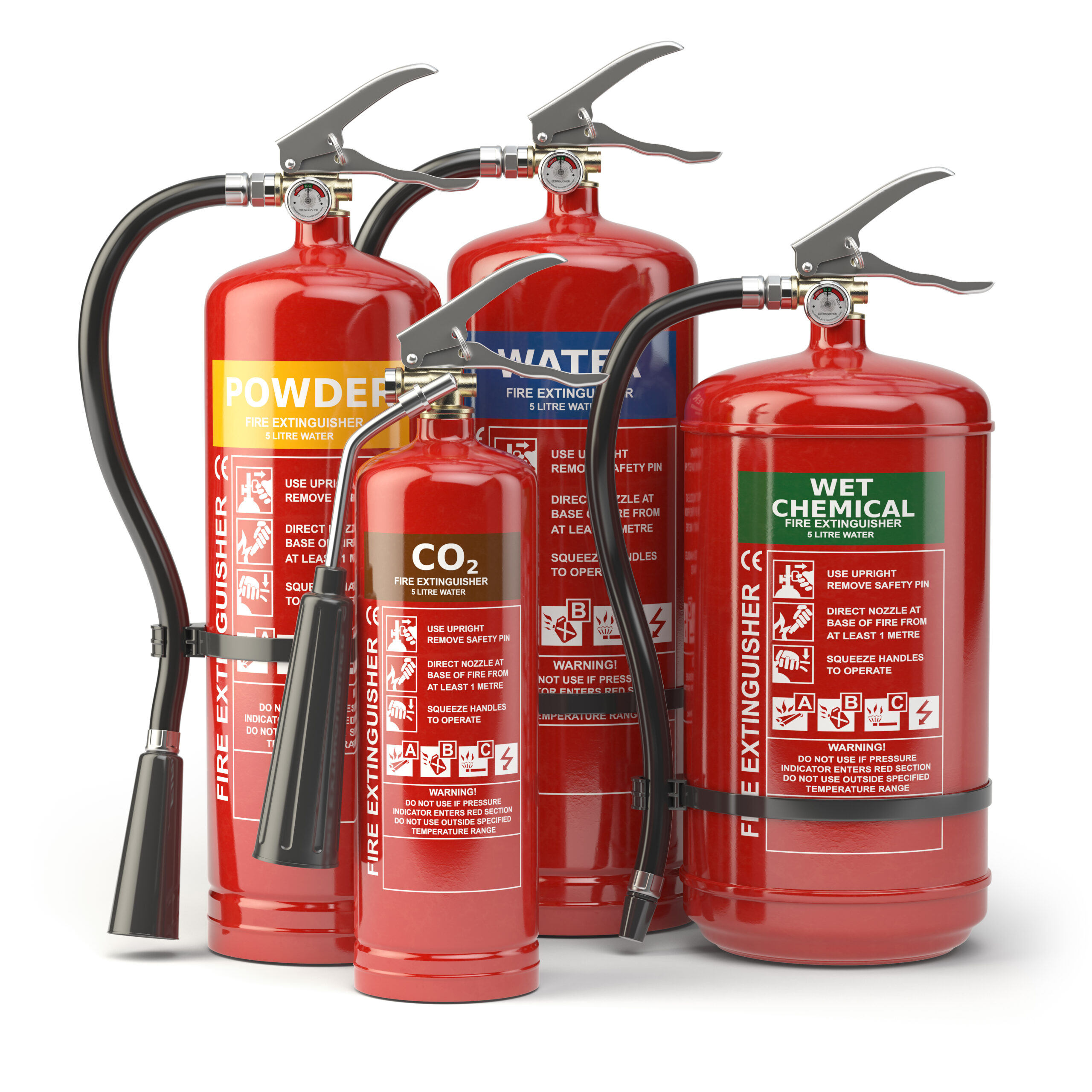
Fire extinguishers are essential tools in fire safety, designed to combat small fires before they escalate into dangerous, uncontrollable blazes. Whether at home, in the workplace, or in public spaces, having the right type of fire extinguisher on hand can make a significant difference in an emergency. This guide aims to provide you with an understanding of the various types of fire extinguishers available and their specific uses. By familiarising yourself with this information, you can enhance your preparedness and ensure a safer environment for yourself and those around you.

1. Water Extinguishers (Class A Fires)
- Use For: Fires involving wood, paper, and textiles.
- How They Work: Cool the burning material.
- Avoid On: Electrical fires, flammable liquids, and metals.
2. Foam Extinguishers (Class A and B Fires)
- Use For: Textiles, flammable liquids like petrol, oil, paint and solvents.
- How They Work: Create a barrier to stop the fire.
- Avoid On: Electrical fires and metals.
3. Dry Powder Extinguishers (Class A, B, and E Fires)
- Use For: Solid combustibles, flammable liquids, electrical equipment.
- How They Work: Coat the fuel to cut off oxygen.
- Avoid On: High wind areas.
4. Carbon Dioxide (CO2) Extinguishers (Class B and Electrical Fires)
- Use For: Electrically energised fires.
- How They Work: Displace oxygen and cool the fire.
- Avoid On: Class B and F Fires as the cooling process is only temporary allowing the fire to reignite.
5. Wet Chemical Extinguishers (Class F Fires)
- Use For: Cooking oils and fats.
- How They Work: Cool the fire and block oxygen. Provides a protective insulated layer on top of the flammable liquid cutting off its oxygen supply.
- Avoid On: Electrical fires as the liquid form can pose a risk of electrocution.
6. Amerex Extinguisher – (Class D Fires)
- Use For: Flammable metals like magnesium, lithium (in solid form) and potassium.
- How They Work: Absorb heat and smother the fire.
- Not effective: On all other types of fires.
7. F-500 Lithium-Ion Extinguisher – (Lithium-Ion in liquid form/ Non-Classified)
- Use For: Lithium-Ion Battery Fires.
- How They Work: F-500 works by encapsulating the burning lithium particles, cooling the fire and preventing oxygen from fueling it further.
- Avoid: Attempting to extinguish if battery has exploded or actively burning.
While there isn’t an Australian standard for this type of extinguisher yet, it has proven effective in reducing and, in some cases, containing battery fires. However, due to the size and power of lithium batteries, these extinguishers may not always be helpful. We recommend not attempting to extinguish the fire if the battery has moved beyond the smoldering stage. Once a lithium-ion battery ignites or explodes, the toxic gases produced can be more hazardous than the fire itself. We recommend evacuating building occupants immediately.
Choosing the Right Extinguisher
Pick an extinguisher based on the types of fires you might face. For example, a kitchen needs a wet chemical extinguisher, while an office should have CO2 extinguishers for electrical equipment.
Having the right fire extinguisher and knowing how to use it can save lives. Check your extinguishers regularly to ensure they work and are easy to reach. For assistance contact Survival Solutions today!