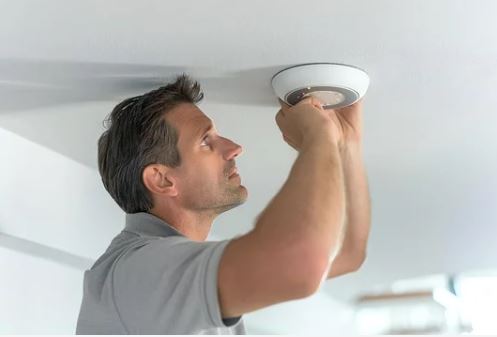
While the terms “smoke detector” and “smoke alarm” are often used interchangeably, they refer to different devices with distinct functionalities. They are the most essential devices installed in any home to protect occupants from the onset of fire within the building.
How Do Smoke Alarms and Smoke Detectors Work?
Smoke alarms and smoke detectors are designed to identify the early warning presence of smoke and activate an alert tone that an occupant can hear even when they are sleeping. Some smoke detectors also activate vibration pads under pillows that help occupants with a hearing impairment. With their unique design for high sound levels, smoke alarms and detectors can rouse even the soundest sleeper, making them an essential safety feature in any home.
Integration and Power Options for Smoke Alarms and Detectors
Smoke alarms and detectors, with their versatile installation options, can be integrated into the home electrical system, ensuring continuous operation even during power outages with the help of a backup battery. Some smoke alarms and detectors only have a battery and can operate without 240-volt power. Both 240-volt electricity-powered and battery-powered smoke alarms and detectors do the same thing but have different power methods.
Battery Types and Lifespan
Some battery-operated smoke alarms contain ordinary 9-volt batteries that require regular replacement. In contrast, other batteries are long-life lithium and can last for the duration or life of the smoke alarm or detector. Modern advancement in battery technology has now allowed for some alarms have an internal sealed battery that is designed to last the lifetime of the alarm (10 years)
When to Replace Your Smoke Alarms
Smoke alarms need to be replaced every ten years from manufacturing. The manufacture date will be on the base and can be checked by the homeowner if battery operated or licensed electrician if they are 240 volts.
Frequently Asked Questions About Smoke Alarms and Detectors
Q: What is the purpose of smoke detectors and smoke alarms? A: Smoke detectors and smoke alarms are crucial safety devices that alert individuals to the presence of a fire, whether they are awake or asleep. They are designed to detect the initial signs of smoke and trigger an audible alert that can be heard even during sleep. Some models also activate vibration pads under pillows to assist those with impairments.
Q: How are smoke alarms and detectors powered? A: Smoke alarms and detectors can be integrated into the home’s electrical system, ensuring uninterrupted operation even during power outages, thanks to a backup battery. Some models operate solely on battery power and do not require a 240-volt power source. Battery-operated smoke alarms may contain standard 9-volt batteries that need regular replacement, while others use long-life lithium batteries that can last for the life of the device.
Q: How often should smoke alarms be replaced? A: Smoke alarms should be replaced every ten years from the date of manufacture, which can be found on the base of the device and checked by the homeowner or a licensed electrician, depending on the power source.
Q: What is the sound level of smoke alarms and detectors? A: The alert triggered by smoke alarms and detectors is typically around 85 decibels – loud enough to wake you but not harm your hearing. It’s a delicate balance between achieving the right volume and not affecting hearing health.
Q: Should I choose a smoke alarm or a smoke detector? A: Choosing between a smoke alarm and a smoke detector depends on your specific needs, as each has its pros and cons. Smoke alarms and heat alarms are typically found in residential homes. They should be your first choice and installed in hallways leading to bedrooms and other sleeping areas. However, in areas prone to false alarms, like a kitchen or butler’s pantry, you might want to install a heat alarm.
Q: Is it a legal requirement to have working smoke alarms or detectors in residential rental properties? A: Yes, it’s a legal requirement to have working smoke alarms or detectors in residential rental properties, short-term rental properties, boarding houses, and motels.
Q: Why does my building lack smoke alarms or detectors? A: If your building lacks smoke alarms or detectors, it could be due to the building code of Australia, which stipulates when these devices are required based on the building’s classification and use. While not regulated, all homes should have working smoke alarms.
Q: What should I do if I need smoke alarms or detectors installed, serviced, or certified? A: If you need smoke alarms or detectors installed, serviced, or certified, Survival Solutions can help. If you encounter any issues, contact Survival Solutions to discuss cost-effective alternatives.